How to Align Hiring Managers and Recruiters for Faster Hiring
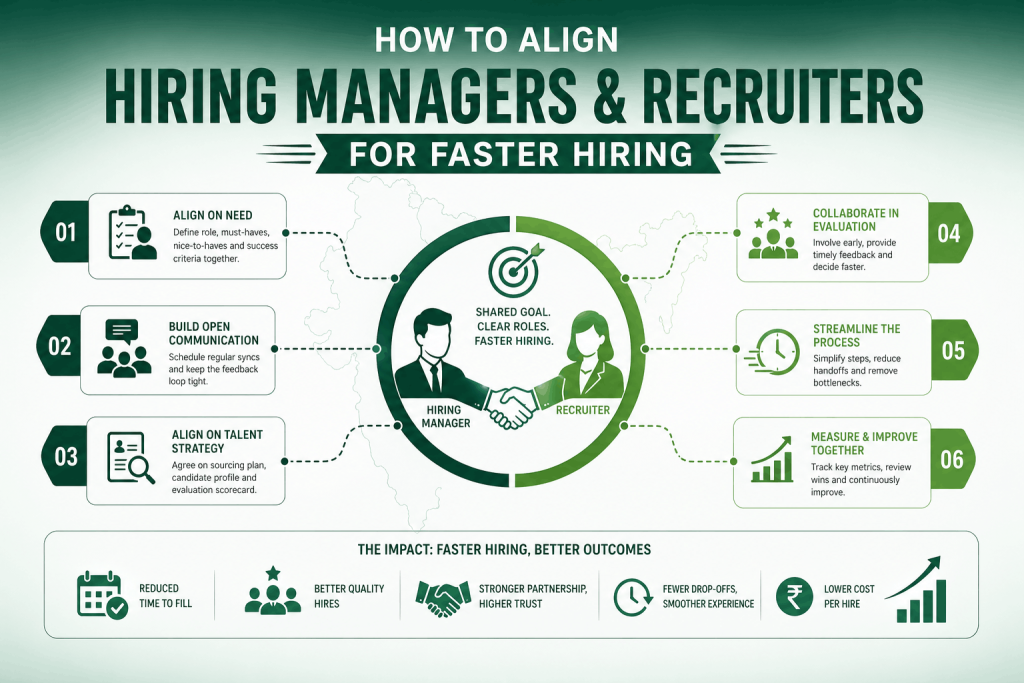
Misalignment between hiring managers and recruiters is one of the leading causes of slow, costly hiring processes. When both sides operate without a shared strategy, roles stay open longer, candidate quality drops, and business momentum stalls. Aligning recruiters and hiring managers around clear expectations, communication cadences, and shared metrics can dramatically reduce time-to-fill and improve the quality of every hire.
Why Hiring Manager and Recruiter Alignment Directly Impacts Faster Hiring
Faster hiring does not happen by accident. It is the result of deliberate collaboration between hiring managers and recruiters. When these two stakeholders are not aligned, the entire talent acquisition process breaks down at nearly every stage, from job intake to offer acceptance.
According to the Society for Human Resource Management (SHRM, 2023), the average time-to-fill a position in the U.S. is 44 days, and poor communication between hiring teams is one of the top contributing factors.
Misalignment typically shows up in three ways:
- Vague or constantly shifting job requirements
- Slow feedback loops after candidate interviews
- Conflicting expectations about salary, experience, and culture fit
Solving these issues starts with creating a structured, repeatable alignment process before any job is posted.
The Hidden Cost of Misalignment in the Hiring Process
Slow hiring is expensive. According to SHRM (2022), the average cost-per-hire in the U.S. is $4,700, but when indirect costs like manager time, lost productivity, and training are factored in, the real figure can be three to four times the role’s annual salary.
Every additional day a role stays open translates to lost revenue, increased workload on existing teams, and the risk of losing top candidates to faster-moving competitors.
How Offshore Recruiters Can Accelerate the Hiring Timeline
One increasingly popular solution for faster hiring is partnering with offshore recruiters. Offshore staffing models give organizations access to experienced recruiting talent at a fraction of the cost of in-house teams, enabling round-the-clock sourcing and screening across global talent pools.
According to Deloitte’s Global Outsourcing Survey (2022), 70% of companies cite cost reduction as a primary reason for outsourcing, while 40% highlight access to specialized skills as a key driver.
When offshore recruiters are properly integrated into the hiring workflow and aligned with hiring managers from day one, time-to-fill metrics can improve significantly.
Key Steps to Align Hiring Managers and Offshore Recruiters for Faster Hiring
Alignment is not a one-time conversation. It is a continuous process built on clear intake meetings, structured feedback loops, and shared performance metrics. Below are the most impactful steps organizations can take.
Step 1 – Conduct a Thorough Job Intake Meeting Before Every Requisition
The job intake meeting is the single most important alignment touchpoint in the hiring process. This is where the hiring manager and recruiter agree on the role’s requirements, success criteria, compensation range, and candidate profile.
A strong intake meeting should cover:
- Must-have vs. nice-to-have qualifications to prevent scope creep
- Compensation benchmarks aligned with current market data
- Interview panel composition and each panelist’s evaluation focus
- Target time-to-fill and milestone checkpoints
- Communication frequency and preferred channels
According to LinkedIn’s Global Talent Trends Report (2023), companies that invest in structured intake processes reduce time-to-fill by up to 30%.
Step 2 – Define Shared Metrics and Accountability for Both Parties
Alignment fails when hiring managers and recruiters are measured by different outcomes. Recruiters are often evaluated on volume and speed, while hiring managers focus on quality and retention. This disconnect creates friction.
To close the gap, organizations should establish shared KPIs, including:
- Time-to-fill per role
- Candidate-to-interview conversion rate
- Offer acceptance rate
- 90-day new hire retention rate
- Interview-to-hire ratio
When both parties are accountable to the same outcomes, collaboration improves naturally.
Step 3 – Establish a Structured Feedback Loop After Every Interview
One of the most common breakdowns between hiring managers and recruiters occurs after interviews. Delayed or vague feedback keeps candidates in limbo, damages employer brand, and slows the entire pipeline.
Best practices for structured feedback include:
- Requiring written feedback within 24 hours of every interview
- Using a standardized scorecard aligned to the role’s competency framework
- Scheduling a weekly pipeline review between recruiter and hiring manager
- Flagging stalled candidates immediately rather than waiting for the next check-in
A Robert Half survey (2023) found that 62% of job seekers lose interest in a role if they do not hear back within two weeks of an interview.
Step 4 – Leverage Offshore Staffing to Scale Recruiting Capacity Without Delay
When internal recruiting teams are stretched thin, offshore staffing provides a scalable solution that keeps hiring velocity high. Offshore recruiters trained in your process, ATS, and culture can handle high-volume sourcing, resume screening, scheduling, and candidate communication around the clock.
Key advantages of integrating offshore recruiters into your hiring team:
- 24-hour sourcing coverage across global time zones
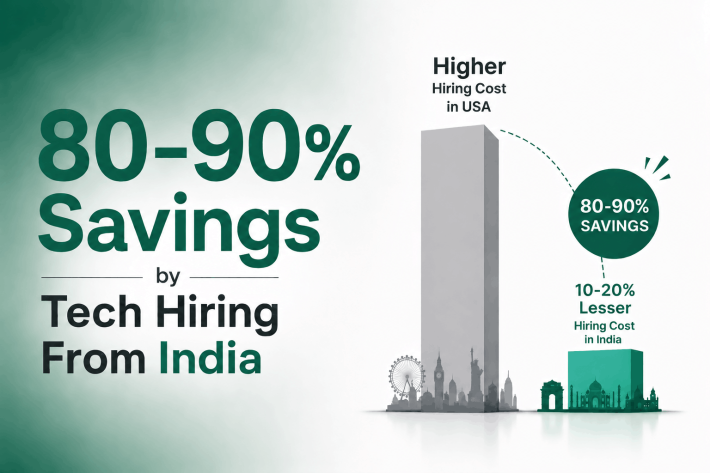
- Cost savings of 40–60% compared to onshore recruiting staff
- Rapid scalability during hiring surges without long-term overhead
- Specialized expertise in niche or technical talent pools
According to Businesswire (2026), the global recruitment process outsourcing (RPO) market was valued at approximately $9.7 billion in 2024 and is projected to grow $22.9 billion in 2030, driven largely by demand for offshore and hybrid staffing models.
Common Pitfalls That Slow Hiring and How Aligned Teams Avoid Them
Even well-intentioned teams fall into patterns that drag out hiring timelines. Recognizing these pitfalls early is key to faster hiring.
| Pitfall | Impact | Aligned Team Solution |
|---|---|---|
| Undefined job requirements | Endless resume reviews | Clear intake meeting with written criteria |
| No feedback SLA | Candidates drop off | 24-hour feedback rule with scorecards |
| Siloed communication | Duplicated outreach | Shared ATS notes and weekly syncs |
| Offshore recruiters not briefed | Misaligned candidate profiles | Full onboarding to role, culture, and process |
| Moving goalposts mid-search | Wasted recruiter effort | Locked criteria post-intake |
Quick Facts and Key Takeaways for Faster Hiring Through Recruiter Alignment
Key Takeaways:
- The average U.S. time-to-fill is 44 days (SHRM, 2023), largely driven by poor recruiter and hiring manager communication.
- 62% of candidates lose interest if they do not hear back within two weeks (Robert Half, 2023).
- Offshore recruiters can reduce recruiting costs by 40–60% while maintaining 24-hour candidate pipeline activity.
- The global RPO market is valued at $9.7 billion (Businesswire, 2026), reflecting the growing reliance on offshore and outsourced recruiting models.
- 70% of companies outsource recruiting functions to reduce costs (Deloitte, 2022).
- Shared KPIs between hiring managers and recruiters are the single most effective structural change teams can make to improve hiring speed and quality.
Conclusion: Build Alignment, Hire Faster, and Scale Smarter
Faster hiring is not about rushing decisions. It is about removing friction from the process so that great candidates reach the right hiring managers without unnecessary delays. By aligning on intake requirements, establishing shared accountability, closing feedback loops quickly, and scaling with offshore recruiters, organizations can cut weeks off their time-to-fill without sacrificing quality.
The companies winning the talent race in 2024 and beyond are those that treat recruiter-to-hiring-manager alignment as a strategic priority, not an afterthought.
Ready to hire faster with a fully aligned recruiting team?
Contact Neuhire today to learn how our offshore staffing solutions connect you with experienced recruiters who are trained, briefed, and ready to deliver qualified candidates from day one. Whether you need to fill one critical role or scale an entire department, Neuhire’s offshore recruiting model is built to move at the speed your business demands.
Help Center
Frequently asked questions

Marketing professional with a passion for people, creativity, and growth. I love turning ideas into campaigns that connect and inspire. Currently part of the Neuhire team, helping businesses find the right talent fast.

Marketing professional with a passion for people, creativity, and growth. I love turning ideas into campaigns that connect and inspire. Currently part of the Neuhire team, helping businesses find the right talent fast.