

Offshore Engineering Talent for Product Development: How Offshore Staffing Accelerates Innovation
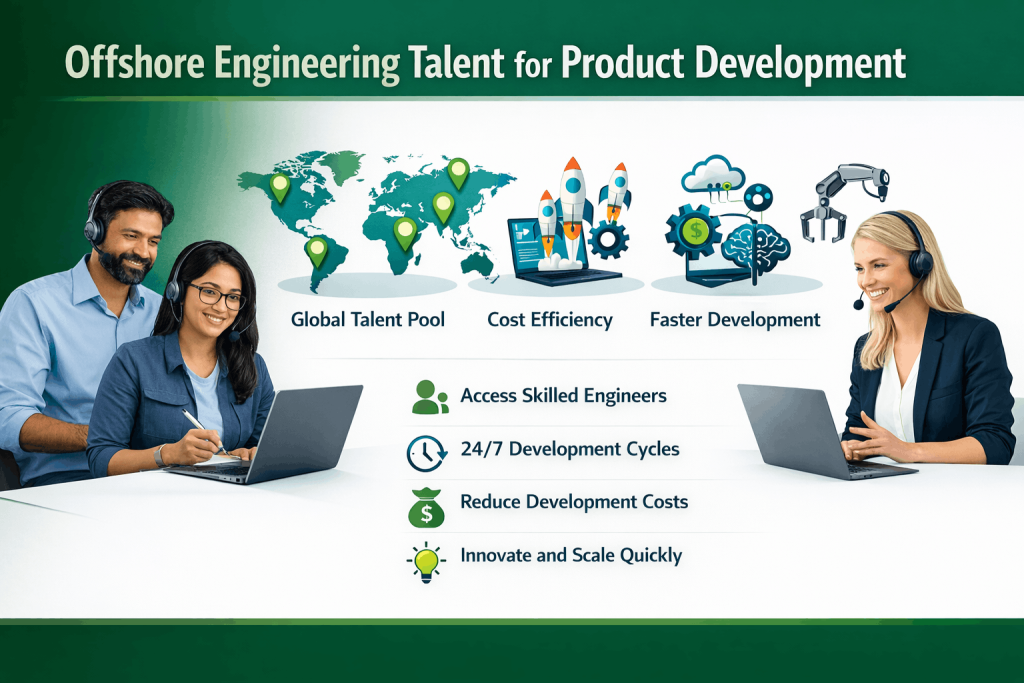
Offshore engineering talent enables companies to build and scale products faster by accessing skilled global developers, engineers, and technical specialists through offshore staffing or offshore hiring models. Businesses leverage offshore teams to reduce development costs, access specialized expertise, and accelerate product innovation without expanding expensive in-house teams.
As product development becomes more complex and competitive, offshore engineering talent has become a strategic advantage for organizations seeking speed, scalability, and innovation.
Quick Facts About Offshore Engineering Talent
- 76% of IT leaders use offshore development teams to access global expertise and scale engineering capabilities.
- 80% of executives plan to maintain or increase outsourcing investments to support business operations and innovation.
- The offshore engineering services outsourcing market was valued at $1.047 billion in 2024 and is projected to grow at a CAGR of 25.5% through 2030.
- The share of offshore engineers increased from 39.9% in 2019 to 49.7% in 2024, showing a steady shift toward global engineering teams.
- 61% of professionals in developing markets prefer offshore roles for better pay and global experience.
These numbers show why offshore hiring is becoming essential for companies building software, digital platforms, and technology products.
What Is Offshore Engineering Talent?
Offshore engineering talent refers to software developers, product engineers, and technical specialists located in another country who work remotely for a company through offshore staffing or outsourcing models.
Companies use offshore hiring to access specialized technical expertise, reduce development costs, and scale engineering teams quickly without geographic limitations.
Typical offshore engineering roles include:
- Software developers
- QA and testing engineers
- DevOps engineers
- Cloud architects
- Data scientists and AI engineers
- Product designers and UI/UX specialists
Many companies build distributed product development teams using offshore talent in regions such as India, Eastern Europe, and Southeast Asia.
Why Companies Use Offshore Staffing for Product Development
Offshore staffing provides several advantages for companies developing software, platforms, and digital products.
1. Access to a Global Engineering Talent Pool
Many regions face shortages of skilled engineers. Offshore hiring allows companies to access millions of developers worldwide.
Countries like India, Poland, and the Philippines produce large numbers of skilled technology professionals every year, making them major hubs for offshore engineering services.
Access to global talent enables companies to:
- Fill hard-to-hire roles quickly
- Hire niche technology experts
- Build specialized engineering teams
This approach is particularly valuable for startups and fast-growing tech companies.
2. Faster Product Development Cycles
Speed is critical in modern product development.
Offshore engineering teams help companies accelerate development by enabling:
- 24-hour development cycles
- Parallel engineering workflows
- Rapid scaling of development teams
For example, a U.S. company can hand off tasks to offshore engineers in Asia at the end of its workday. Development continues overnight, reducing overall project timelines.
This model significantly improves product release speed.
3. Cost Efficiency Without Compromising Quality
One of the biggest reasons companies choose offshore staffing is cost efficiency.
Hiring engineers in major technology hubs such as Silicon Valley can cost significantly more than hiring skilled offshore developers.
Offshore hiring can reduce costs related to:
- Salaries
- Office space
- Infrastructure
- Recruitment expenses
However, modern offshore staffing focuses less on cost alone and more on value and innovation.
According to Deloitte’s Global Outsourcing Survey (2024), organizations increasingly outsource to access skilled talent and improve service quality rather than purely reduce costs.
4. Scalability for Product Teams
Product development needs change quickly.
Offshore engineering teams allow companies to scale resources up or down based on project demands.
| Development Stage | Offshore Talent Role |
|---|---|
| MVP Development | Full-stack developers |
| Product Testing | QA engineers |
| Growth Phase | DevOps and cloud engineers |
| Feature Expansion | Specialized developers |
This flexibility allows companies to manage product development efficiently without long-term hiring commitments.
Offshore Hiring Models for Product Development
Companies use different offshore hiring models depending on their business needs.
1. Offshore Staff Augmentation
In this model, companies add offshore engineers to their existing development teams.
Benefits include:
- Direct management of engineers
- Seamless integration with in-house teams
- Flexible team expansion
This model works well for agile product development environments.
2. Dedicated Offshore Development Teams
A dedicated offshore team works exclusively for a company but operates from another country.
Key features include:
- Long-term collaboration
- Consistent engineering resources
- Strong product knowledge
This approach is often used by enterprises building complex platforms.
3. Offshore Product Development Outsourcing
In this model, an external vendor manages an entire product development project.
The vendor handles:
- Hiring engineers
- Project management
- Development delivery
This approach is common for companies launching new digital products or prototypes.
Key Technologies Driving Offshore Engineering Talent Demand
Offshore engineering teams often specialize in emerging technologies needed for modern product development.
1. Software Development
Languages and frameworks commonly used include:
- Java
- Python
- JavaScript
- React and Angular
- Node.js
These technologies power web and mobile applications.
2. Cloud Computing
Cloud platforms have created high demand for offshore engineers with experience in:
- AWS
- Microsoft Azure
- Google Cloud
Cloud engineers help companies build scalable infrastructure for digital products.
3. Artificial Intelligence and Data Engineering
Many offshore engineering teams now specialize in:
- Machine learning
- Data analytics
- AI product development
- Automation platforms
These capabilities enable companies to build intelligent products and data-driven platforms.
Real Example: Offshore Engineering Talent in Product Development
Consider a technology startup building a SaaS platform.
Step 1: Initial Product Development
The company hires offshore developers to build the MVP quickly.
Roles include:
- Two full-stack developers
- One UI/UX designer
- One QA engineer
This reduces development costs while accelerating product launch.
Step 2: Scaling the Product
As the platform gains users, the company expands its offshore team with:
- DevOps engineers
- Cloud architects
- Backend developers
This helps maintain platform stability and performance.
Step 3: Innovation and Feature Development
The offshore engineering team works alongside in-house product managers to develop new features.
The result is faster innovation and continuous product improvement.
Challenges of Offshore Engineering Teams
While offshore hiring offers many benefits, companies must address several challenges.
Communication and Time Zone Differences
Teams working across multiple time zones must implement structured communication.
Best practices include:
- Daily stand-ups
- Shared project management tools
- Overlapping work hours
Collaboration platforms such as Slack, Jira, and Zoom help reduce communication barriers.
Quality Control and Engineering Standards
Companies must ensure offshore engineers follow internal development standards.
Effective strategies include:
- Detailed documentation
- Code review processes
- Agile development frameworks
Strong technical leadership ensures consistent quality across global teams.
Security and Intellectual Property Protection
Product development often involves sensitive intellectual property.
Companies must implement strong security practices such as:
- Secure VPN access
- Data protection policies
- Controlled repository access
These measures protect company assets and product innovation.
Best Practices for Managing Offshore Engineering Talent
Organizations that successfully leverage offshore staffing follow several proven strategies.
1. Define Clear Product Requirements
Detailed product documentation ensures offshore engineers understand project goals.
This includes:
- Technical architecture
- User stories
- Product roadmaps
2. Use Agile Development Processes
Agile frameworks such as Scrum help distributed teams collaborate effectively.
Key agile practices include:
- Sprint planning
- Daily stand-ups
- Sprint reviews
These practices improve transparency and accountability.
3. Invest in Collaboration Tools
Successful offshore teams rely on modern collaboration platforms such as:
- Jira
- GitHub
- Slack
- Zoom
These tools enable real-time communication and efficient project management.
4. Build Long-Term Engineering Partnerships
Offshore hiring works best when companies build long-term partnerships with staffing providers.
This approach ensures:
- Consistent engineering talent
- Strong product knowledge
- Improved collaboration
The Future of Offshore Engineering Talent
The global demand for offshore engineering talent is expected to grow significantly.
Several trends are driving this shift:
- Global talent shortages in technology roles
- Increased adoption of remote work
- Rapid digital transformation across industries
- Growing demand for specialized engineering skills
As companies compete to build innovative products, offshore staffing will become a core component of global product development strategies.
Organizations that adopt global engineering teams early gain a competitive advantage in speed, innovation, and scalability.
Key Takeaways
- Offshore engineering talent enables companies to accelerate product development and innovation.
- Offshore staffing provides access to specialized technical skills and global talent pools.
- Companies use offshore hiring to reduce development costs and scale engineering teams quickly.
- Offshore teams support faster development cycles through distributed workflows.
- Successful offshore product development requires strong communication, agile processes, and secure infrastructure.
Conclusion
Offshore engineering talent has transformed how companies build and scale products. By leveraging offshore staffing and offshore hiring models, organizations can access skilled global engineers, accelerate development timelines, and innovate faster in competitive markets.
As technology demands continue to grow, companies that adopt global engineering teams will be better positioned to deliver high-quality products and scale efficiently.
Looking to build a high-performing offshore engineering team?
Neuhire helps organizations access skilled global engineers through flexible offshore staffing solutions designed to accelerate product development and innovation. Contact Neuhire today to explore offshore hiring strategies tailored to your business.

Marketing professional with a passion for people, creativity, and growth. I love turning ideas into campaigns that connect and inspire. Currently part of the Neuhire team, helping businesses find the right talent fast.

Marketing professional with a passion for people, creativity, and growth. I love turning ideas into campaigns that connect and inspire. Currently part of the Neuhire team, helping businesses find the right talent fast.