
Cybersecurity Burnout: The Hidden Driver of the Talent Shortage and How Offshore Staffing Helps Fix It
The quiet resignation happening inside your security team
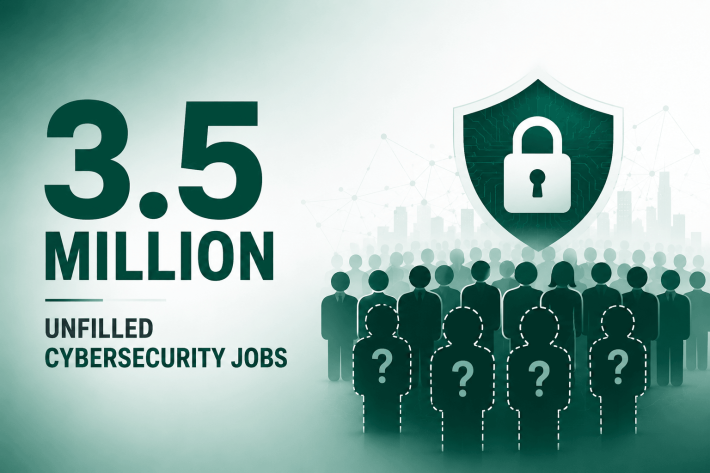
The cybersecurity industry has spent years sounding the alarm about a talent shortage. Millions of unfilled roles. Not enough graduates. Not enough pipelines. But there is a parallel crisis that gets far less attention, one that is actively shrinking the pool of experienced professionals already in the field.
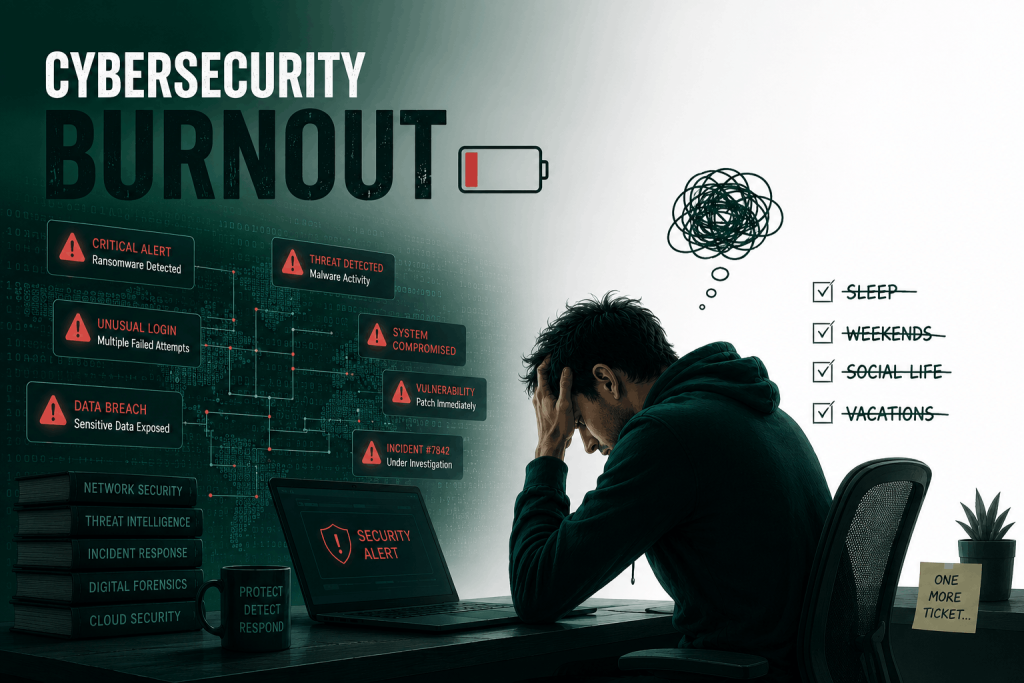
Burnout is pushing cybersecurity’s best people out the door. And unlike a hiring gap, which takes years to fill, burnout is happening right now, in your team, among the analysts who already know your environment, your tools, and your threat landscape.
According to the ISC² 2024 Cybersecurity Workforce Study, 55% of cybersecurity professionals say their job significantly impacts their mental health. Nearly half report considering leaving the field entirely within the next two years. These are not junior employees still finding their footing. These are experienced practitioners, the very people organizations cannot afford to lose.
The industry has responded by trying to hire its way out of the problem. But recruiting new analysts does nothing for a team that is already stretched to breaking point. If the working conditions that burned out the last analyst remain unchanged, the next one will burn out too.
Offshore staffing offers something fundamentally different: structural relief. Not a recruitment solution, but a workload solution. Here is how it works, and why it may be the most practical intervention available to security leaders today.
What is actually causing burnout? The four root drivers
Burnout in cybersecurity is not a personality problem or a generational attitude. It is the predictable outcome of working conditions that would exhaust anyone. Understanding the root causes is essential before evaluating any solution.
- Alert overload is the most immediate pressure. The average SOC analyst manages more than 500 security alerts per day, according to research by Trend Micro. Studies estimate that between 20% and 40% of those alerts are false positives, meaning analysts spend a significant portion of their day chasing threats that do not exist while real ones risk being buried in the noise. The cognitive toll of sustained, high-stakes vigilance across hundreds of signals per shift is enormous.
- Always-on culture compounds the problem. Cyber threats do not observe business hours, which means security teams are expected to maintain 24/7 coverage. In understaffed organizations, this falls on a small number of people through on-call rotations, extended shifts, and weekend work. Sleep disruption alone has measurable effects on cognitive performance, including the kind of analytical thinking that security work demands.
- Chronic understaffing means that departures immediately increase the burden on those who remain. When one analyst leaves a team of four, the remaining three absorb that workload. If burnout drove the departure, the remaining team is now more likely to burn out themselves. This is not a hypothetical cycle; it is the documented reality at many security operations centers.
- Lack of meaningful work affects even the most motivated professionals. Skilled analysts with years of experience and advanced certifications often spend the majority of their time on repetitive Level 1 triage tasks, reviewing the same alert categories, following the same runbooks, escalating or closing tickets. When high-skill work is crowded out by volume work, professionals lose the sense of growth and contribution that makes demanding jobs sustainable.
The cost nobody is calculating
When a security analyst resigns, most organizations count the cost in terms of the open headcount and the recruiting process ahead. The real cost is significantly higher and significantly less visible.
Replacing a mid-level security analyst typically costs between $50,000 and $100,000 when recruiting fees, interviewing time, onboarding, and the productivity loss during ramp-up are factored in, according to SHRM workforce data. That figure does not include the institutional knowledge that walks out with the departing analyst, the increased workload absorbed by remaining team members during the gap, or the elevated risk posture during the transition period.
More critically, fatigued analysts make more mistakes. A study published in the Journal of Cybersecurity found that analyst performance in threat detection degrades meaningfully under conditions of sustained alert fatigue. Missed alerts, slow response times, and escalation errors all increase when teams are understaffed and overworked. Burnout is not just an HR issue. It is a direct security risk.
The cycle is self-reinforcing. Departures increase workload on remaining staff. Increased workload accelerates burnout. Burnout drives further departures. Organizations that focus exclusively on recruitment without addressing working conditions are treating a symptom while the underlying condition worsens.
Where offshore staffing breaks the cycle
The most effective offshore staffing deployments in cybersecurity do not simply fill headcount. They restructure how work is distributed, which changes the experience of every member of the team.
- Overnight and weekend coverage is the single highest-impact application. In most organizations, the on-call structure for overnight and weekend hours is the primary source of work-life imbalance for domestic security staff. Offshore analysts in time zones that make these hours a normal working day, such as teams in Manila, Bangalore, or Bucharest, can take primary ownership of these shifts. Domestic analysts stop receiving 2am phone calls. They stop working through weekends. Their recovery time between shifts is restored, and with it, their cognitive performance and job satisfaction.
- Alert triage offloading addresses the volume problem directly. Offshore Level 1 and Level 2 analysts absorb the high-volume, repetitive work that constitutes the majority of alert queues. They follow established runbooks, close confirmed false positives, and escalate genuine threats with appropriate context. This does not eliminate the need for senior analysts. It frees them from spending 70% of their day on work that does not require their expertise.
- Skill elevation for onshore teams is one of the least discussed benefits of a well-structured offshore model. When volume work is offloaded, domestic analysts can spend more of their time on threat hunting, red team exercises, security architecture reviews, and incident response. These are the high-skill, high-meaning activities that attracted most professionals to the field in the first place. Restoring access to meaningful work is one of the most effective retention interventions available to security leaders.
- Staffing ratios are restored without the cost of hiring at domestic salary levels. An organization that needs a team of six to operate sustainably but can only afford three domestic hires at $130,000 each can use offshore staffing to bridge the gap at 40 to 60% lower cost per role. The team operates at the right size. Individual workloads become manageable. The conditions that drive burnout are structurally reduced.
The follow-the-sun model, explained
The follow-the-sun model is the operational framework that makes offshore security coverage work in practice. The concept is straightforward: security operations follow daylight around the globe, with each regional team handing off to the next at the end of their working day.
A typical implementation for a US-based organization looks like this. The domestic team operates during core business hours, roughly 8am to 6pm Eastern. At the end of that shift, open incidents, active threat investigations, and relevant context are compiled into a structured handoff brief. The offshore team, arriving at the start of their primary working day in a time zone 8 to 12 hours ahead, picks up from there. They handle overnight monitoring, triage incoming alerts, manage any escalations, and prepare their own handoff brief for the domestic team’s morning start.
Critically, the offshore analysts in this model are not working a graveyard shift. They are working their normal business hours, in their own time zone, at their peak cognitive performance. This matters for quality. A well-rested analyst working a primary day shift performs at a fundamentally different level than an on-call analyst pulled from sleep at 2am.
For organizations with European operations, a third layer can be added, with teams in Eastern Europe covering the Central European business day and handing off sequentially. The result is genuine 24/7 coverage with no team member working outside normal hours.
The operational requirements for a successful follow-the-sun model are not complicated. They include a shared SIEM and ticketing platform, a structured handoff protocol, clear escalation paths, and a defined set of runbooks that ensure consistent response regardless of which team is on shift. Most organizations already have the tooling. What they lack is the offshore team to complete the coverage cycle.
Addressing the quality concern directly
The most common objection to offshore security staffing is a quality concern: are offshore analysts as capable as domestic ones? For organizations considering this model, the answer requires looking at evidence rather than assumptions.
The certification landscape is global. CISSP, CEH, CompTIA Security+, and OSCP holders are distributed across every major offshore cybersecurity hub. The Philippines, India, Poland, Romania, and Colombia all have active cybersecurity professional communities with high certification rates. The ISC² global member data confirms that certified security professionals are not concentrated in North America and Western Europe.
Reputable offshore cybersecurity providers operate under the same compliance frameworks as domestic managed security service providers. ISO 27001 certification and SOC 2 Type II attestation are standard at established firms. GDPR, HIPAA, and PCI-DSS alignment is achievable and documented. The compliance bar is not lower offshore; it is the same bar, applied to a different geography.
On the question of alert quality specifically, there is a counterintuitive finding worth noting. A rested analyst working a primary day shift in a well-staffed team will catch more true positives and generate fewer false escalations than a fatigued analyst managing an unsustainable alert volume in an understaffed domestic SOC. The quality risk that organizations fear from offshore staffing is often already present in their existing burned-out teams. Structural relief addresses both problems simultaneously.
What a healthy team looks like with offshore support
The goal of offshore staffing is not to replace domestic security teams. It is to allow those teams to operate at the level they were hired for. A well-designed hybrid model distributes work by type and requires different judgment rather than distributing it by geography alone.
Onshore roles suited to domestic teams include the CISO and senior security leadership, incident commanders during active breach response, threat hunters conducting proactive investigation, security architects designing and reviewing controls, and any role requiring government clearance or board-level access.
Offshore roles that work well in distributed models include SOC Level 1 and Level 2 analysts handling alert triage and initial investigation, vulnerability management and patch prioritization teams, threat intelligence analysts producing daily and weekly reporting, compliance monitoring and evidence collection functions, and application security reviewers working within development pipelines.
Organizations that implement this division consistently report the same outcome: domestic analysts are more engaged, take on more meaningful work, report higher job satisfaction, and stay longer. The retention improvement is not incidental. It is a direct consequence of restoring sustainable workloads and access to high-skill work.
How to start: three steps to structural relief
Addressing burnout through offshore staffing requires a different planning process than a standard hire. The goal is workload redesign, not headcount addition.
- Step 1: Audit workloads before roles. Identify which members of your existing team are regularly working beyond standard hours, absorbing on-call shifts more than twice per month, or spending the majority of their time on Level 1 triage tasks. These data points tell you where structural relief is most needed and which functions are best candidates for offshore support.
- Step 2: Map your coverage gaps. Overnight hours, weekend shifts, and public holiday coverage are the most common gaps in domestic-only security operations. Document exactly when your team’s coverage is thinnest, and use that as the brief for your offshore engagement. Starting with a clearly bounded scope produces faster results and easier measurement.
- Step 3: Run a pilot with defined success metrics. Place one or two offshore analysts on a 90-day engagement with specific, measurable objectives: response time to alerts during covered hours, escalation accuracy rate, handoff quality scores. Measure against your baseline. Use the results to build the business case for scaling, or to refine the model before expanding it.
Conclusion
Neuhire places qualified offshore cybersecurity analysts in 4 to 6 weeks, with compliance documentation, structured onboarding support, and handoff protocol templates included. A pilot engagement is the lowest-risk way to test whether the model fits your organization before committing to a larger build.
The burnout crisis in cybersecurity is real, it is measurable, and it is getting worse. Recruiting alone will not solve a retention problem. But restructuring how security work is distributed, giving experienced analysts sustainable workloads and meaningful work, is something organizations can act on now.
The next analyst who walks out is not just a headcount problem. They are a security risk, a knowledge loss, and a signal that the conditions driving burnout have not changed. Offshore staffing, done well, changes the conditions.
Ready to reduce burnout and build a security team that retains its best people? Neuhire can help with offshore staffing that delivers relief in weeks, not months.

Marketing professional with a passion for people, creativity, and growth. I love turning ideas into campaigns that connect and inspire. Currently part of the Neuhire team, helping businesses find the right talent fast.

Marketing professional with a passion for people, creativity, and growth. I love turning ideas into campaigns that connect and inspire. Currently part of the Neuhire team, helping businesses find the right talent fast.