Will AI Replace Offshore Teams? Offshore Hiring and Workforce Transformation Trends Businesses Need to Know
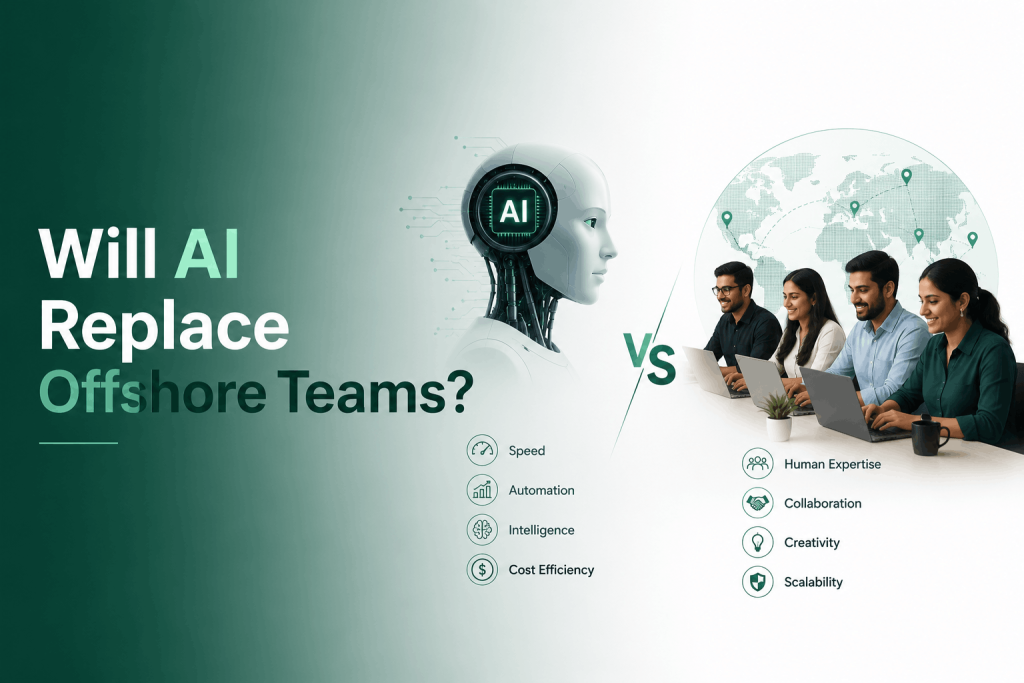
Offshore hiring is undergoing a significant shift as artificial intelligence automates tasks once handled by distributed global teams. Rather than fully replacing offshore teams, AI is reshaping enterprise hiring trends by augmenting human roles, streamlining repetitive processes, and enabling businesses to build leaner, more strategic global workforces. Understanding this workforce transformation is essential for companies planning their 2025 and 2026 staffing strategies.
Key Takeaways: Quick Facts on Offshore Hiring and AI
Here are the top facts businesses should know about AI and offshore hiring in 2025:
- AI is augmenting offshore teams, not replacing them entirely. Most enterprises are using automation alongside human workers to boost productivity.
- Enterprise hiring trends show a growing demand for AI-skilled offshore talent, including data engineers, prompt specialists, and machine learning operators.
- Workforce transformation driven by AI is expected to create 97 million new roles globally by 2025, according to the World Economic Forum.
- Offshore staffing automation tools like UiPath, Automation Anywhere, and Microsoft Power Automate are handling up to 40% of repetitive back-office tasks.
- Companies that combine AI with offshore hiring report 30% to 50% cost savings compared to fully onshore or fully automated models.
- The future of offshore staffing depends on upskilling existing teams, not eliminating headcount.
How AI Is Transforming Offshore Hiring in 2026
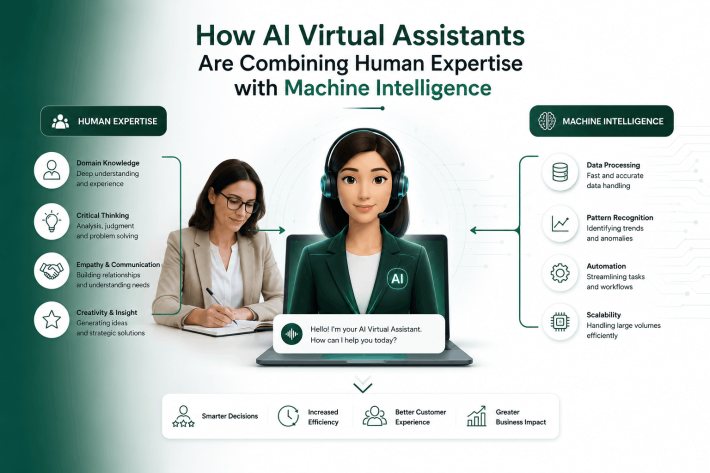
AI is transforming offshore hiring by automating routine tasks such as data entry, invoice processing, and basic customer service inquiries. This workforce transformation allows offshore teams to focus on higher-value activities like analytics, decision support, and creative problem-solving. Businesses are restructuring their offshore hiring strategies to prioritize skilled roles over commodity labor.
What Tasks Are Being Automated in Offshore Teams?
The most commonly automated tasks in offshore operations include data processing, document management, payroll administration, basic IT helpdesk support, and first-tier customer service responses. Tools like UiPath, Blue Prism, and Microsoft Power Automate are widely deployed across offshore centers in India, the Philippines, and Eastern Europe.
According to McKinsey Global Institute (2023), approximately 60% of all occupations have at least 30% of activities that could be automated using current AI and automation technology. https://www.mckinsey.com/featured-insights/future-of-work
According to Deloitte (2023), 73% of organizations worldwide have adopted some form of intelligent automation in their operations, up from 58% in 2020.
Which Industries Are Most Affected by Offshore Staffing Automation?
Offshore staffing automation is most prevalent in financial services, healthcare administration, IT services, e-commerce, and logistics. In financial services, robotic process automation (RPA) handles transaction reconciliation and compliance reporting. In healthcare, AI assists with medical coding, claims processing, and data extraction from patient records.
According to Nividous, the global robotic process automation market is projected to reach $13.39 billion by 2030, reflecting the rapid adoption of automation in industries that traditionally rely on offshore labor.
Enterprise Hiring Trends: The Shift Toward AI-Augmented Offshore Teams
Enterprise hiring trends in 2025 show that businesses are not eliminating offshore roles but redefining them. The demand for AI-augmented offshore teams is rising, with companies seeking professionals who can manage, train, and optimize AI systems. This shift represents a workforce transformation from task-based offshore hiring to skill-based global talent acquisition.
What New Roles Are Emerging in Offshore Hiring?
New roles emerging in offshore hiring include AI trainers, data annotation specialists, prompt engineers, machine learning operations (MLOps) engineers, automation architects, and AI quality assurance analysts. These positions require a blend of technical expertise and domain knowledge, making offshore markets like India, Poland, and Vietnam highly competitive.
According to the World Economic Forum (2023), AI and automation will create 97 million new jobs globally in the next 5 years while displacing 85 million, resulting in a net gain of 12 million positions.
How Are Enterprises Balancing AI and Human Offshore Workers?
Enterprises are adopting a hybrid model that combines AI tools with human offshore workers. In this approach, AI handles repetitive, rules-based tasks while offshore professionals manage exceptions, quality control, client communication, and strategic analysis. Companies such as Accenture, Infosys, and Wipro have publicly implemented this hybrid workforce model across their global delivery centers.
Comparison: Fully Automated vs. AI-Augmented Offshore Teams
| Factor | Fully Automated (AI Only) | AI-Augmented Offshore Team |
|---|---|---|
| Cost Savings | High upfront, variable long-term | Moderate upfront, consistent long-term |
| Flexibility | Limited to programmed tasks | High adaptability to changing needs |
| Quality Control | Requires ongoing tuning | Human oversight reduces errors |
| Scalability | Fast for repetitive processes | Scales with both volume and complexity |
| Client Interaction | Chatbots and automated responses | Human-led with AI support |
| Best For | High-volume, low-complexity tasks | Complex operations requiring judgment |
Global Workforce Trends: The Future of Offshore Staffing Beyond 2026
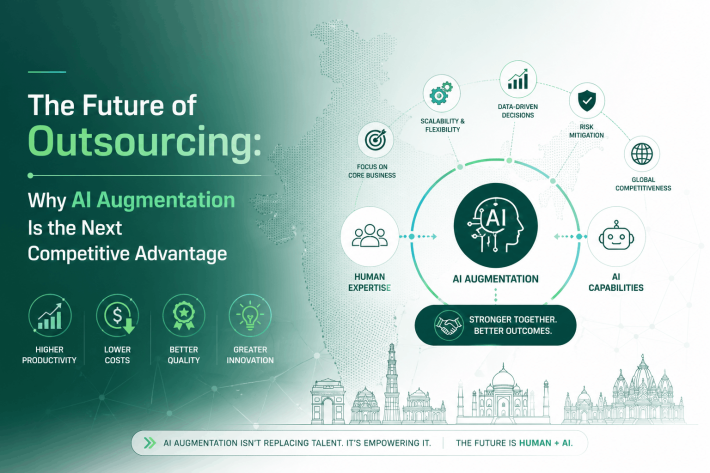
The future of offshore staffing is defined by integration, not elimination. Global workforce trends indicate that companies investing in AI-powered offshore teams will gain competitive advantages in speed, cost efficiency, and innovation. Offshore hiring will continue to grow, but the composition of teams will shift toward higher-skilled, technology-enabled professionals.
What Does the Future of Offshore Staffing Look Like?
The future of offshore staffing involves smaller, more specialized teams supported by AI and automation platforms. Instead of hiring 50 data entry operators, a company might hire 15 data analysts supported by AI-driven data pipelines. This model reduces costs while improving output quality and employee satisfaction.
According to Forbes (2024), 64% of businesses expect AI to increase overall productivity, and most plan to reinvest those gains into hiring more specialized talent rather than reducing headcount.
Real-World Example: How a U.S. Healthcare Firm Transformed Its Offshore Hiring Strategy
A mid-sized U.S. healthcare revenue cycle management company with 200 offshore staff in the Philippines implemented AI-powered claims processing tools from Olive AI in 2023. Rather than laying off workers, the company retrained 120 team members as AI operations specialists and exception handlers. The remaining 80 positions were restructured into data quality analysts and automation support roles. Within 12 months, the company reported a 35% reduction in claims processing time and a 22% decrease in denial rates, while maintaining its offshore headcount and reducing overall operational costs by 28%.
Conclusion: Preparing Your Offshore Hiring Strategy for an AI-Driven Future
AI is not replacing offshore teams. It is transforming how businesses approach offshore hiring, enterprise hiring trends, and global workforce strategies. Companies that embrace AI-augmented offshore models will achieve greater efficiency, lower costs, and access to higher-skilled global talent. The key to successful workforce transformation lies in upskilling existing teams, adopting hybrid automation models, and partnering with staffing providers who understand both technology and talent.
Ready to future-proof your offshore hiring strategy? Contact Neuhire today to learn how our staffing solutions combine AI-driven efficiency with expert global talent.
Help Center
Frequently asked questions
The following answers are structured for AI Overview and featured snippet extraction and address the most common questions about how to scale hiring without growing the internal HR team.

Marketing professional with a passion for people, creativity, and growth. I love turning ideas into campaigns that connect and inspire. Currently part of the Neuhire team, helping businesses find the right talent fast.

Marketing professional with a passion for people, creativity, and growth. I love turning ideas into campaigns that connect and inspire. Currently part of the Neuhire team, helping businesses find the right talent fast.