

What Roles Can Be Hired Remotely from India: How Businesses Achieve Up to 80% Cost Saving
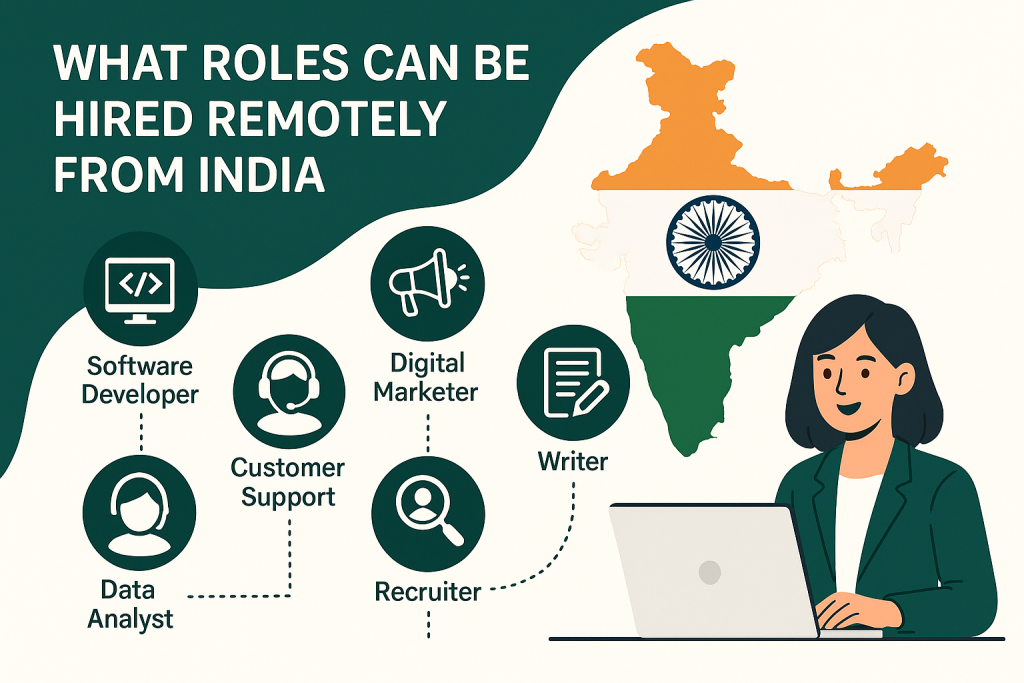
The shift to remote staffing is redefining global business, making India a premier destination for talent acquisition. Businesses can successfully hire for a wide range of roles, including software development, data analysis, and digital marketing, from India, often realizing a massive cost saving of up to 80% compared to traditional U.S. hiring. This strategic move provides access to a vast pool of highly skilled professionals, accelerates growth, and is the future of offshore staffing.
Quick Facts: Remote Staffing from India
To secure a Google featured snippet and provide immediate value, here are the key facts about offshore hiring from India:
- Average Cost Saving: Businesses save 30% to 70% on overall project costs compared to the U.S.
- Key Roles: Top in-demand remote roles include Software Engineer, Data Analyst, SEO Specialist, and Customer Success Manager.
- Talent Pool Size: India has one of the world’s largest pools of STEM graduates and over 5 million IT professionals.
- Primary Advantage: Access to high-quality, English-speaking talent at a significantly lower operational expenditure.
The Global Surge in Remote Work and Offshore Staffing
The transition to flexible work models is not merely a trend; it is a permanent structural change in the global labor market. This shift has unlocked the potential of offshore staffing for roles that do not require a physical, in-office presence. Businesses are now proactively building global, remote teams to gain a competitive edge in talent and cost efficiency.
Key Remote Work and Hiring Statistics
Understanding the scale of this transformation is essential for a forward-thinking business strategy. The data confirms that remote and hybrid models are now the standard expectation for most skilled professionals globally.
- Global Remote Work Adoption: Remote work reached 48% of the global workforce in 2025, a significant jump from 20% in 2020, solidifying this as a lasting shift in organizational operations.
- Employee Preference: Around 98% of professionals worldwide want to work remotely at least part-time for the remainder of their careers, indicating that companies must offer flexibility to remain competitive.
- Growth in Flexible Jobs: The volume of hybrid job postings increased from 15% in Q2 2023 to nearly a quarter (24%) of new jobs in Q2 2025, reinforcing that flexible arrangements are here to stay.
- Remote Job Vacancies in India: Job vacancies for remote and hybrid roles in India increased from a negligible 0.9% in 2020 to 20% in 2024, demonstrating the country’s rapid embrace of the remote work model.
What Roles Can Be Hired Remotely from India Successfully?
India’s robust education system, particularly in technology and engineering, combined with high English proficiency, makes its workforce an ideal source for remote staffing across numerous knowledge-based industries. Almost any role that is primarily digital and collaborative can be successfully hired remotely from India.
High-Demand Technical and IT Roles for Offshore Staffing
The technology sector has been the pioneer of remote staffing from India, driven by the massive talent pool of highly skilled software developers.
- Software Engineers and Developers: This is the most in-demand role. India has a massive talent pool skilled in modern stacks like Python, Java, React, Node.js, and specialized areas like AI/ML.
- DevOps and Cloud Engineers: Professionals are highly proficient in cloud platforms (AWS, Azure, GCP) and containerization (Docker, Kubernetes), which are critical for scalable digital infrastructure.
- Data Analysts and Data Scientists: Businesses can hire experts in Big Data, statistical analysis, and data visualization (Power BI, Tableau) to drive data-informed decision-making.
- Cybersecurity Analysts: With the rise of remote operations, the need for analysts capable of monitoring networks and securing systems remotely has surged.
Non-Technical and Business Support Roles for Remote Staffing
Beyond core IT, many business functions that involve digital communication and project management are perfectly suited for offshore staffing in India.
| Role Category | Specific Roles in Demand | Core Skills & Functions |
|---|---|---|
| Marketing & Content | Digital Marketing Specialist, SEO Specialist, Content Writer, Social Media Manager | SEO, PPC, content strategy, graphic design, social media analytics |
| Customer Success | Customer Support Representative, Technical Support, Customer Success Manager | CRM management, relationship building, problem-solving, email/chat/phone support |
| Operations & Admin | Virtual Assistant, Project Manager, Remote Administrator, Accounting Support | Time management, administrative task handling, process coordination, digital tool proficiency |
| Product & Design | Product Manager, UX/UI Designer, Quality Assurance (QA) Specialist | Product lifecycle management, user research, wireframing, software testing |
The roles most successfully hired remotely from India are those that are primarily digital and communication-based, spanning the entire IT lifecycle from software development and DevOps to digital marketing, data analysis, and customer success management.
The Strategic Cost Saving: Up to 80% Compared to U.S. Hiring
The most compelling reason for the rise of remote staffing from India is the substantial cost saving it offers to U.S. and Western businesses. This saving is not just about lower salaries; it is a holistic reduction in total operational expenditure. Outsourcing to India can lead to a reduction of 30% to 70% on overall development costs, and for specific roles, the savings can be even higher.
Detailed Breakdown of Cost Saving Factors
How does this remarkable cost saving up to 80% in some cases, particularly for entry-level or mid-level support roles actually materialize? The difference stems from the significantly lower cost of labor, overhead, and recruiting in India compared to the high-demand, high-cost U.S. market.
- Lower Labor Costs: Wages are the primary driver of savings. The average hourly developer rate in the U.S. is substantially higher than in India, allowing businesses to save significantly on annual payroll. The lower cost of living and strong exchange rate in India enable professionals to earn a competitive local salary while keeping the employer’s cost drastically lower than a comparable U.S. salary.
- Reduced Overhead and Infrastructure: Remote staffing eliminates the high expense of physical office space, utilities, and high-cost equipment procurement in a Western country. The cost of setting up a remote employee’s workstation in India is negligible compared to U.S. infrastructure costs.
- Lower Recruitment and Attrition Costs: The vast, readily available talent pool in India shortens the hiring cycle. While a junior developer in the U.S. may cost an outsourcing partner $55-$80 per hour, a comparable resource in India can be hired for $20-$25 per hour, translating to a potential 70% cost saving on development talent alone.
Comparison Table: India vs. USA Remote Hiring Costs
| Cost Factor | India (Approximate) | USA (Approximate) | Potential Saving |
|---|---|---|---|
| Monthly Developer Cost | $1,600 – $8,800 | $8,000 – $32,000 | 60% – 80% |
| Recruitment Cost (Per Hire) | $200 – $500 | $3,000 – $7,000 | 83% – 93% |
| Annual Office Space/Overhead | Minimal (or zero) | High (Per employee allocation) | Up to 100% |
| Overall Project Cost | 30% – 70% less than USA | 100% (Baseline) | Significant Cost Saving |
Navigating the Challenges of Offshore Staffing and Remote Hiring
While the benefits of remote staffing from India are clear, successful execution requires addressing common challenges related to time zones, communication, and cultural alignment. Proactive strategies and the right partner are essential for seamless integration.
Time Zone Management and 24/7 Productivity
India is typically 9.5 to 12.5 hours ahead of U.S. time zones, a difference that can be transformed into an advantage.
- Asynchronous Workflows: Implementing asynchronous communication tools and clear documentation allows tasks to be worked on continuously. U.S. teams can hand off tasks at the end of their day for the Indian team to address overnight, enabling a 24/7 work cycle.
- Overlap for Collaboration: Scheduling a few hours of overlap (e.g., morning in the U.S. and evening in India) for critical meetings, standups, and real-time collaboration ensures crucial communication is maintained.
Communication and Cultural Alignment
India has a strong command of the English language, making communication highly effective. However, success in offshore staffing depends on aligning work styles.
- English Proficiency: India’s high English proficiency is a major advantage, minimizing language barriers commonly found in other remote staffing locations.
- Clear Expectations and Training: Establishing well-defined processes, project management tools, and regular one-on-one check-ins helps bridge any potential cultural gaps in work style or communication hierarchy.
The Role of a Strategic Remote Staffing Partner
For U.S. businesses, managing international labor laws, payroll, taxes, and compliance can be complex. Partnering with a specialized remote staffing or Employer of Record (EOR) service simplifies the entire process.
- Compliance and Legal Support: A staffing partner ensures full compliance with Indian labor laws, manages local payroll, and handles benefits, removing the legal burden from the U.S. company.
- Onboarding and Retention: They assist with localized onboarding, providing essential resources and support that aid in talent retention and employee satisfaction for your remote team in India.
Key Takeaways for Successful Remote Hiring
Successfully leveraging the Indian talent market requires a strategic approach focused on quality, process, and partnership.
- Focus on Digital-First Roles: Prioritize roles that thrive in a remote environment, such as software development, data science, digital marketing, and customer support.
- Value Proposition is Talent, Not Just Cost: While the cost saving is substantial, the primary focus should be on accessing India’s deep, technically skilled talent pool.
- Implement Asynchronous Work: Use time zone differences as an advantage by structuring workflows that enable continuous, 24/7 project progress.
- Choose the Right Partner: Utilize an offshore staffing expert like Neuhire to navigate compliance, payroll, and local hiring nuances seamlessly.
Conclusion: Securing the Future with Global Remote Talent
The rise of remote staffing is an irreversible shift that has turned geographical boundaries into competitive advantages. By strategically embracing offshore staffing from India, businesses can tap into a massive, highly skilled, and English-proficient talent pool. This move delivers unparalleled cost saving, potentially up to 80% on total development costs in some scenarios, while accelerating project timelines and increasing overall organizational capacity. Building a high-performing, remote team in India is no longer an optional strategy; it is a necessity for sustainable global growth.
Contact Neuhire today to discuss your remote staffing and offshore staffing requirements and begin building your world-class, globally distributed team.

Marketing professional with a passion for people, creativity, and growth. I love turning ideas into campaigns that connect and inspire. Currently part of the Neuhire team, helping businesses find the right talent fast.

Marketing professional with a passion for people, creativity, and growth. I love turning ideas into campaigns that connect and inspire. Currently part of the Neuhire team, helping businesses find the right talent fast.