
How to Reduce Time-to-Hire Without Sacrificing Candidate Quality
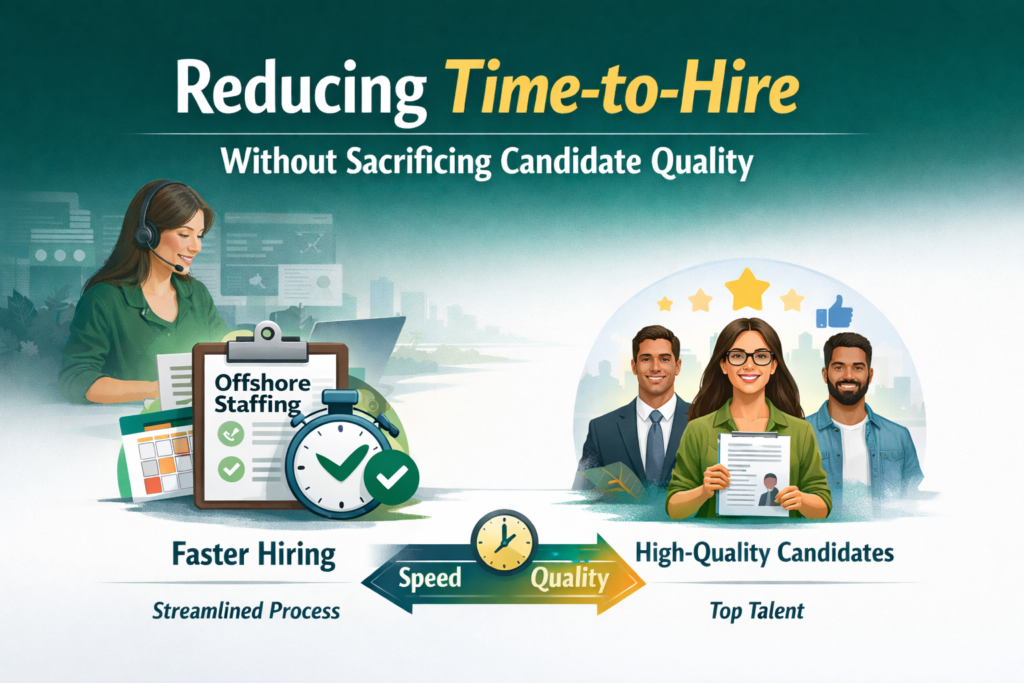
To reduce time to hire without compromising the quality of your talent pool, you must shift from a reactive to a proactive recruitment model. This involves streamlining candidate screening through automation, implementing structured interview frameworks, and building a continuous talent pipeline. By removing administrative bottlenecks and focusing on data-driven decision-making, organizations can secure top-tier talent before competitors do, while maintaining high performance standards and cultural alignment.
Quick Facts: Reducing Time-to-Hire in 2026
- Average Hiring Duration: HR leaders report it takes approximately 5 weeks on average to hire for permanent roles.
- Application Abandonment: Over 92% of job seekers never complete their applications if the process is too complex.
- Cost of Error: A bad hire costs companies an average of $14,900 in lost productivity and recruitment expenses.
- Retention Risk: Nearly 46% of new hires fail within the first 18 months when processes prioritize surface-level skills over team compatibility.
- Competitive Speed: Roughly 25% of job seekers consider a prolonged interview process a total dealbreaker.
What is Time-to-Hire and Why Does It Matter?
Time-to-hire is the specific number of days between a candidate entering your recruitment pipeline (applying) and the moment they accept your job offer. While “time-to-fill” measures the entire lifecycle from job opening to start date, time-to-hire serves as a direct indicator of your internal recruitment team’s efficiency and the overall candidate experience.
Optimizing this metric is essential because top talent remains on the market for an incredibly short window. If your internal hurdles like slow feedback or excessive interview rounds delay an offer, you risk losing the best candidates to faster-moving competitors.
The Hidden Cost of a Slow Hiring Process
When hiring takes too long, your organization suffers from more than just an empty seat. According to Robert Half (2024), a significant portion of candidates will “move on” if they feel the process is dragging. Furthermore, SHRM (2024) highlights that 75% of employers admit to hiring the wrong person, often because they felt pressured to fill a role quickly after a long, unsuccessful search. A streamlined process ensures you have the luxury of choice rather than the desperation of a vacancy.
Time-to-Hire Reduction Strategies for 2026
To reduce time to hire effectively, you must address the specific bottlenecks within your recruitment funnel. Here are the most impactful time-to-hire reduction strategies for modern HR teams.
1. Optimizethe Application for Higher Completion Rates
Many companies lose talent before the first interview. SelectSoftware Reviews (2025) data shows that the vast majority of candidates abandon lengthy applications. Reducing friction by allowing one-click applications or removing redundant “re-upload your resume” fields can increase your initial applicant pool quality by 20% or more.
2. Implement Structured Interview Scoring
Standardized interviewing is one of the most effective ways to speed up hiring process timelines. By using a uniform set of questions and a predefined scoring rubric, hiring managers can make objective decisions immediately after an interview rather than waiting for days of subjective “gut feel” discussions.
3. Leverage AI-Powered Applicant Tracking Systems (ATS)
Automation is the key to scale. Modern ATS platforms can automatically screen resumes for essential qualifications, schedule interviews without back-and-forth emails, and even use AI to summarize candidate strengths. Research indicates that organizations planning to implement AI-driven recruitment by 2027 expect a significant reduction in administrative burden.
4. Narrow the List with Prerequisite Requirements
Instead of interviewing everyone who looks good on paper, use “knock-out questions” in your application. For example, if a role requires weekend work or specific certification, making these mandatory fields ensures that only candidates who meet the non-negotiables reach your desk.
5. Utilize Global and Offshore Staffing Partners
Internal teams often struggle with niche roles or high-volume surges. Partnering with a specialized offshore provider like Neuhire allows you to bypass the initial 30 days of sourcing. Specialized firms maintain pre-vetted pipelines, meaning you start with the “Final Five” candidates instead of a pile of 500 resumes.
Key Industry Benchmarks for Recruitment Speed
Understanding industry standards helps you calibrate your goals. If your time-to-hire is significantly higher than these benchmarks, your process likely needs a structural audit.
| Sector | Average Time-to-Fill (Days) | Key Bottleneck |
|---|---|---|
| Finance & Accounting | 35–45 Days | Compliance & Background Checks |
| Technology / IT | 40–55 Days | Technical Assessments |
| Human Resources | 35 Days | Cultural Fit Evaluations |
| Administrative Support | 25–30 Days | High Application Volume |
| Healthcare | 50+ Days | Credentialing Requirements |
How to Speed Up Hiring Process Without Sacrificing Quality
The primary risk of “fast hiring” is the increased probability of a “bad hire.” However, quality and speed are not mutually exclusive if you replace intuition with data.
Focus on Skills-Based Hiring
Traditional resumes are increasingly seen as poor predictors of success. SelectSoftware Reviews (2025) notes a massive shift toward skills-based assessments. By testing a candidate’s actual ability through a practical task early in the process, you ensure that the people moving forward are technically competent, regardless of how well they “interview.”
Reduce the Number of Interview Rounds
Data from CareerBuilder (2024) suggests that hiring pressure often leads to poor decisions, but too many rounds leads to candidate drop-off. Aim for a maximum of three to four touchpoints. If you cannot decide after four meetings, your criteria are likely not clear enough.
Detailed Action Plan for HR Leaders
- Audit your funnel: Identify which stage has the longest “wait time.” Is it the time between the first and second interview? Or the time to extend an offer?
- Standardize feedback: Require hiring managers to submit feedback within 24 hours of an interview while the candidate is still fresh in their minds.
- Pre-approve salary ranges: Ensure that the recruiter knows exactly what the maximum offer can be to avoid a week-long approval chain once a candidate is selected.
- Invest in a “Silver Medalist” program: Keep in touch with the second-best candidate from previous roles. They are already vetted and can be hired almost instantly when a new opening appears.
Conclusion
Successfully reducing your time-to-hire is about removing the friction that stops you from making a decision. In 2025, the labor market favors the fast. By moving to a structured, automated, and skills-first recruitment model, you can significantly reduce time to hire while actually increasing the long-term success rate of your employees.
The goal is not to move fast and break things, but to move efficiently and secure the best. Organizations that master the balance of speed and precision will always have a competitive advantage in the war for talent.
Scale Faster with Neuhire
Are you finding it difficult to find top-tier talent quickly in your local market? Neuhire specializes in providing high-quality offshore staffing solutions that help you fill critical roles in half the time of traditional methods. We handle the sourcing, vetting, and initial screening, so you only spend time on the best candidates.

Marketing professional with a passion for people, creativity, and growth. I love turning ideas into campaigns that connect and inspire. Currently part of the Neuhire team, helping businesses find the right talent fast.

Marketing professional with a passion for people, creativity, and growth. I love turning ideas into campaigns that connect and inspire. Currently part of the Neuhire team, helping businesses find the right talent fast.