

6 Mistakes to Avoid When Scaling a Remote Workforce
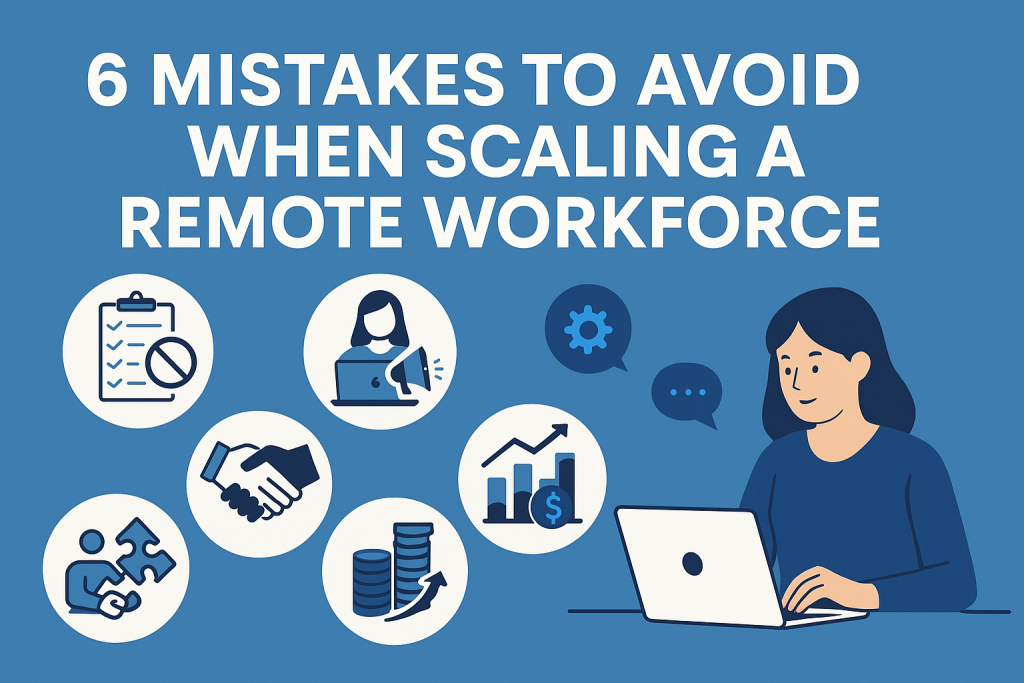
Scaling a remote workforce offers flexibility, access to global talent, and cost savings. However, it also presents unique challenges that can hinder growth and productivity if not managed well. In 2025, with remote work becoming a standard practice worldwide, companies need to navigate these complexities deliberately. This blog highlights the six key mistakes companies often make when scaling remote teams and offers actionable strategies to avoid them—ensuring a sustainable, engaging, and high-performing remote work culture.
1. Unclear Communication and Expectations
Clear, consistent communication is the cornerstone of remote team success. When scaling, vague instructions or sporadic check-ins create confusion, duplicated efforts, missed deadlines, and employee disengagement.
What to avoid:
- Ambiguous goal-setting and inconsistent updates
- Relying heavily on unstructured chats or emails without defined processes
How to fix it:
- Set clear roles, responsibilities, and deadlines
- Use standardized communication tools like Slack, Microsoft Teams, or Zoom
- Document processes and meeting outcomes centrally accessible to all team members
- Establish regular check-ins that balance frequency with respect for individual focus time
2. Ignoring Time Zone Differences and Scheduling Conflicts
Scaling often means hiring across multiple time zones. Ignoring these differences causes burnout, missed collaboration opportunities, and fragmented workflows.
Common pitfalls:
- Expecting synchronous availability without considering time zone overlaps
- Scheduling redundant or unnecessary meetings outside core hours
Best practices:
- Define core overlapping work hours for real-time collaboration, supported by asynchronous communication for other tasks
- Use scheduling tools like World Time Buddy or Google Calendar that adjust for time zones
- Record meetings and share notes to keep remote workers informed asynchronously
Futuramo’s 2023 survey found that 65% of employees prefer full-time remote work but emphasized flexibility around time zones as crucial for productivity.
3. Micromanaging Instead of Building Trust
Micromanagement takes away freedom, lowers team spirit, and can make people quit. This is even worse in remote teams where building trust is already more difficult.
Common mistakes:
- Monitoring every action or requiring constant status updates
- Focusing on hours logged rather than outcomes achieved
How to lead effectively:
- Set clear expectations and outcomes, then empower employees to manage their workflows
- Schedule regular but non-intrusive one-on-ones focused on support and development
- Foster a culture where employees feel trusted and accountable
Forbes highlights that building trust over micromanaging drives better engagement and retention in remote teams.
4. Overloading Employees with Meetings and Ineffective Tool Use
Too many meetings cause fatigue and reduce time for focused work, while poorly chosen or inconsistently used tools create friction.
What to avoid:
- Scheduling excessive video calls or meetings without clear agendas
- Using multiple overlapping tools without training or standardization
Strategies to implement:
- Limit meetings to necessary topics with clear goals and time limits
- Emphasize asynchronous collaboration through platforms like Asana, Trello, or Microsoft Planner
- Standardize tool usage company-wide and provide training to maximize efficiency
Buffer’s State of Remote Work report found that 44% of remote workers suffer from burnout partly due to excessive meetings and poor tool use.
5. Neglecting Work-Life Balance and Burnout Prevention
Remote work can blur boundaries between professional and personal life, leading to overwork, stress, and disengagement.
Risk factors:
- Employees feeling pressure to work beyond scheduled hours to prove productivity
- Lack of defined workspaces and routines making it hard to disconnect
How to support balance:
- Encourage setting clear work hours and respecting off-hours communication boundaries
- Promote mental health initiatives and regular breaks
- Provide guidance on creating dedicated home workspaces
6. Underinvesting in Remote-First Technology
Relying on outdated tools hampers communication, collaboration, and engagement across locations.
Key Statistics
- 75% of employees believe their current remote-work tools need improvement.
- 83% say good technology is essential to do their job well.
Recommendations
- Equip teams with secure, reliable communication tools (e.g. Slack, Teams), video platforms (e.g. Zoom), and project management software (e.g. Asana, Jira) to ensure seamless collaboration regardless of location.
- Ensure VPNs, cloud storage, and hardware meet performance and security standards to minimize downtime, protect sensitive data, and maintain operational efficiency.
- Regularly survey teams to identify pain points, assess tool effectiveness, and gather suggestions for improvements. Use this feedback to upgrade or customize tools, provide targeted training, and ensure that every team member can work efficiently without unnecessary friction or technical barriers.
Conclusion
Successfully scaling a remote workforce requires a proactive approach to overcoming the unique challenges of distributed work. By focusing on clear communication, respecting time zones, building trust instead of micromanaging, optimizing meetings and tool usage, prioritizing work-life balance, and investing in remote-first technology, companies can create a resilient, high-performing, and engaged remote culture.
In 2025 and beyond, organizations that embrace modern tools, flexible practices, and empathetic leadership will be best positioned to attract top global talent, maintain productivity, and foster long-term employee satisfaction.
Neuhire is a modern talent solutions platform committed to helping businesses connect with skilled professionals across India’s distributed workforce. We specialize in flexible hiring models, leveraging technology to match top talent with the right opportunities – from IT and emerging tech to creative and operational roles. With a focus on inclusivity, Neuhire actively supports women in remote and hybrid careers, helping employers build diverse, future-ready teams.
Ready to scale your distributed team without the common mistakes? Contact Neuhire for expert staffing solutions tailored to your remote workforce needs or download our free guide on building high-performance remote teams.

Marketing professional with a passion for people, creativity, and growth. I love turning ideas into campaigns that connect and inspire. Currently part of the Neuhire team, helping businesses find the right talent fast.

Marketing professional with a passion for people, creativity, and growth. I love turning ideas into campaigns that connect and inspire. Currently part of the Neuhire team, helping businesses find the right talent fast.